Clinical Superintelligence
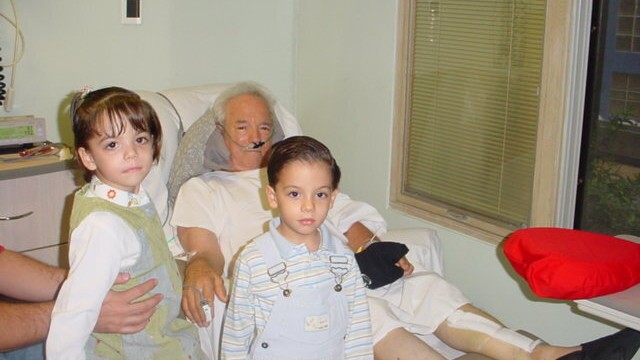
My grandfather died without a diagnosis.
He spent months undergoing tests, surgeries, and treatments. He saw good doctors at good hospitals. And, in the end, no one could tell us what killed him.
Yet the answers were in his body the whole time: in his bloodwork, his scans, the thousands of signals his biology produced every day he spent on the ICU.
But they simply weren't legible to a human.
His body was speaking in a language more complex than human cognition could comprehend, and for most of medical history, the best we could do was train specialists to interpret fragments of it.
This has always been the limit of medicine and we are now at the threshold of breaking it.
Deep learning—and specifically the transformer architecture—has brought within reach something that belonged to science fiction only a few years ago: Clinical Superintelligence.
And while the rest of the industry is spending this moment on workflow automation, Eden is building it.
Let me explain.
The most important decision in medicine is the diagnosis, everything else is downstream.
The treatment, the surgery, the years of recovery, the funeral. All of it depends on a precise answer, at the right time.
And yet, even inside healthcare, most people misunderstand what diagnosis is and the nature of the intelligence that powers it.
Clinical reasoning operates at two fundamentally distinct levels:
- Level One: Where clinicians reason over previous conclusions: the radiology report, the discharge summary, the coded diagnosis, the chart. This data has already been interpreted and compressed by someone else.
- Level Two: Where clinicians consider raw evidence: the new images, the waveform, the pathology slide, the genome. This is the high-dimensional, multimodal data from which novel and patient-specific insights emerge.
Most of medicine's shortcomings are Level One failures.
A clinician reads the chart, matches the pattern, and inherits every prior conclusion embedded in it. They take data points at face value and discard the signals that don't fit. This is the home of diagnostic bias: in trusting yesterday's conclusion over today's evidence, many clinicians miss the truth.
Although Level One reasoning is essential in the practice of medicine, it constitutes pattern matching and not true clinical intelligence.
What separates world-class doctors from the rest is that they know when the pattern doesn't fit. And when it doesn't, they drop down to the evidence: they open the CT rather than the CT report, challenge the read, correlate the labs against the waveform, pull the slides, interrogate the genetics.
Today, machines already match or exceed human performance across many core Level One tasks, and it is increasingly clear that this class of clinical reasoning will soon be solved by generalist AI models.
Yet we refuse to believe the industry consensus that Level One reasoning constitutes the end state of clinical artificial intelligence. Information gathering, differential diagnosis generation, test selection, and guideline-concordant treatment recommendations—however powerful as efficiency tools—are impotent when applied to incomplete, biased, or lossy representations of clinical reality.
It is our fundamental thesis that only applying intelligence to medicine's existing abstractions—notes, codes, reports, and other lossy representations of clinical reality—will not produce the step change in standard of care the system requires.
Our goal therefore is not merely to scale the current standard, but to surpass it.
This is the true definition of Clinical Superintelligence and Eden is designed to solve it: extracting new clinical truths directly from biological signals, before they are filtered through human perception.
As it emerges, diagnostic instruments will transcend human perception, yielding biological information we never knew they contained. Medicine will move upstream, from treating what has already happened to intercepting what has not.
Scarcity, geography, time, and cognition have seemed like the immutable constraints of medicine, and they will all fall away. In their place will emerge an age of clinical abundance and universal access, in which our species gains unprecedented sovereignty over its health and fate.
Until one day, no human will die or suffer the consequences of a late or inaccurate medical diagnosis.
This will be the age of Clinical Superintelligence.
And, building it, is the difference between creating an actual AI doctor and drawing a stethoscope on a language model.